
Recommended books on emotional abuse.
These books help survivors, professionals, and advocates see what’s really happening behind the scenes of emotional abuse cases.
Books that help you see the truth about emotional or narcissistic abuse.
If you’re wondering how the hell this happens – how narcissistic abusers twist the system, turn kids against their protective parent, and walk away unscathed – start with Nightmare in Hostage Hills. It lays it all out: the manipulation, the legal failures, the gut-wrenching reality of these cases.
After years of seeing professionals miss the red flags, I put together The Case of Nightmare in Hostage Hills – a guide for therapists, social workers, and legal professionals who need to see past the lies and actually protect survivors and kids.
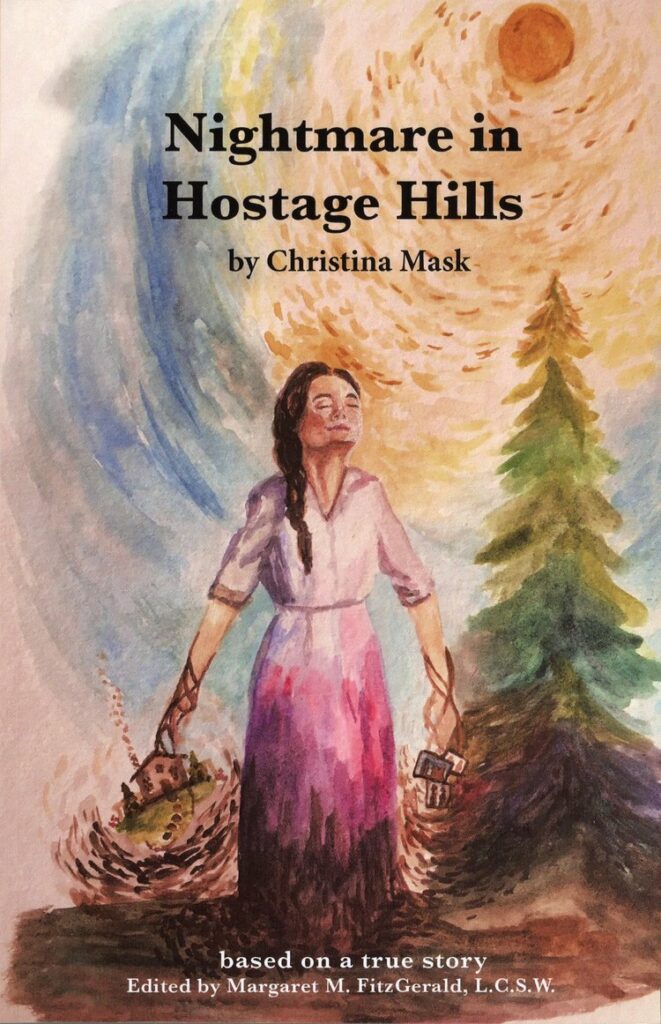
Nightmare in Hostage Hills
By Christina Mask
How does a manipulative abuser convince the courts, therapists, and even their own kids that they’re the good guy – while systematically destroying the other parent? Nightmare in Hostage Hills is a real-life case study that lays bare the tactics narcissists use to control, gaslight, and isolate their victims, even after separation.
Based on decades of domestic abuse research and real legal cases, this book exposes how the family court system enables abusers, why protective parents are often dismissed, and how children get weaponized in these battles.
If you’ve ever thought:
- Why does the court believe him when I’m the one telling the truth?
- How did my child suddenly turn against me?
- Why does everyone think he’s such a great guy when I know what he’s really like?
- Am I the crazy one?
Then this book will give you answers. It’s not just you – this is a known pattern of abuse, and it happens more often than people realize.
Why read it?
This book will teach you:
- How narcissistic abusers charm courts, therapists, and social workers while discrediting their victims.
- Why children sometimes align with their abusive parent, and how to help without pushing them further away.
- The most common red flags that therapists and legal professionals miss in these cases.
- What actually works when you’re dealing with coercive control in court, and what makes things worse.
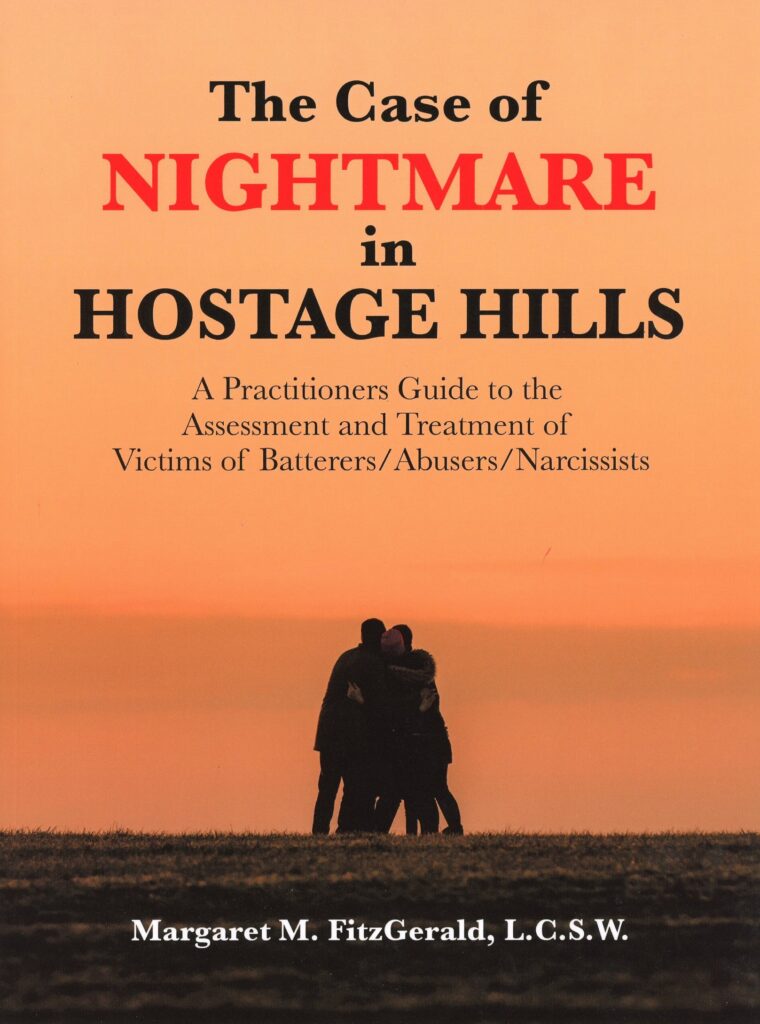
The Case of Nightmare in Hostage Hills
A practitioner’s guide to the assessment and treatment of victims of batterers/abusers/narcissists
By Margaret FitzGerald, L.C.S.W.
Most therapists, social workers, and even attorneys aren’t trained to recognize emotional abuse or coercive control. They might understand physical violence, but the psychological tactics abusers use? Those fly under the radar.
This book is designed for professionals who work with families in crisis, whether in mental health, legal advocacy, or social services. It lays out exactly what to look for, what questions to ask, and how to intervene in a way that actually protects survivors.
If you’re a therapist, attorney, social worker, school counselor, or advocate, this book will help you do your job better. It’s packed with case studies, interview techniques, and realistic strategies to stop abusers from manipulating the system.
Why read it?
This book will teach you:
- How to assess emotional abuse and coercive control, even when there’s no physical violence.
- The key differences between high-conflict cases and coercive control dynamics.
- How to document abuse effectively so courts and legal professionals take it seriously.
- Why survivors struggle to explain what’s happening, and how to ask the right questions to get the full picture.
- How to avoid being manipulated by abusers in legal and clinical settings, and what to do when it happens.